
What role do ideas really play in a person’s life?
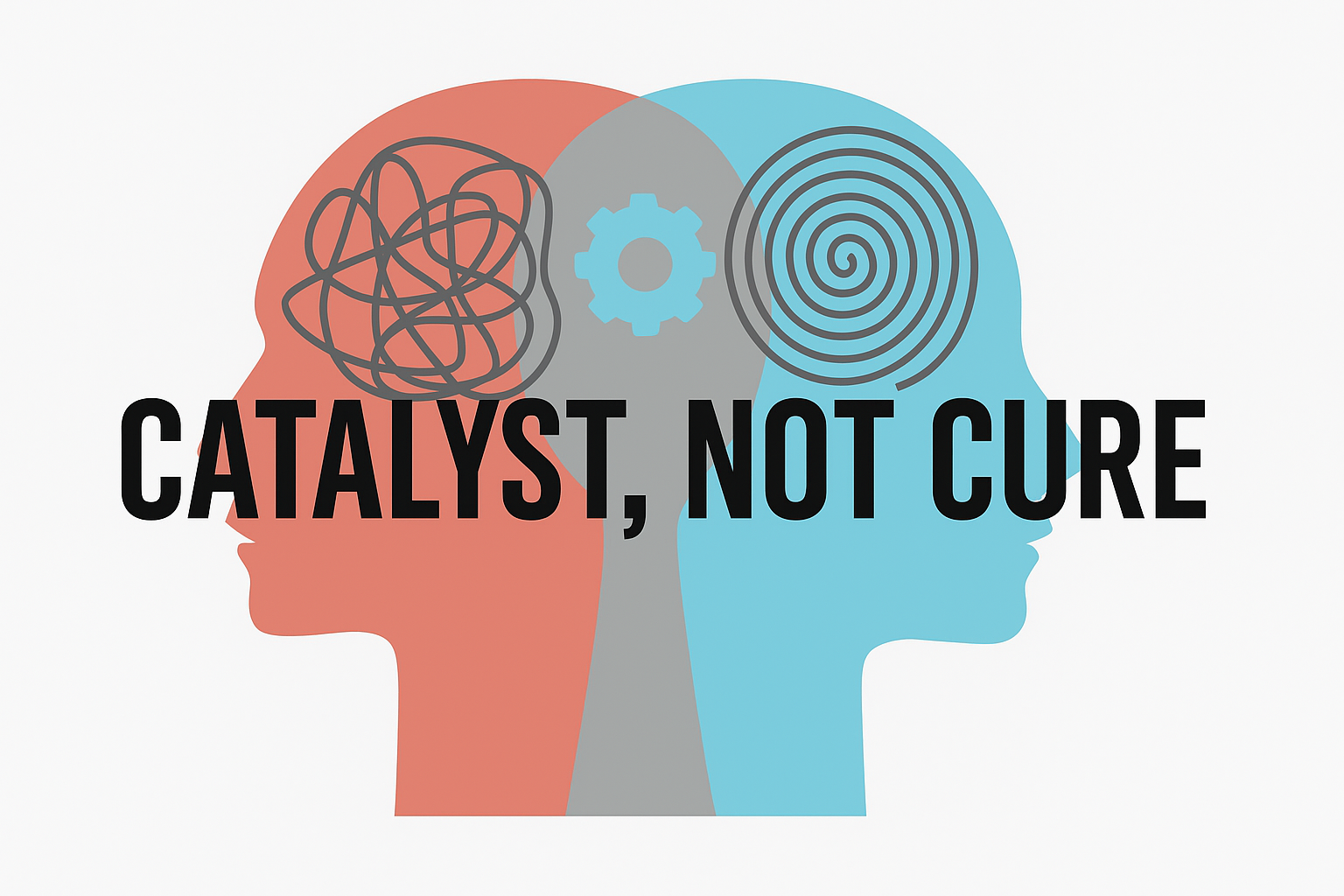
They don’t remake us wholesale. They don’t tear us down and rebuild us from scratch. Instead, they act more like catalysts. An idea can accelerate transformation in someone who is already self-organizing in a certain direction, but it rarely creates something entirely new.
That’s because every human being is already self-organizing into a form of selfhood. The question isn’t whether, but how. And this “how” is deeply shaped by intelligence and personality traits. Someone low in openness to experience probably won’t be interested in my work at all. Someone low in conscientiousness might enjoy the aesthetics or philosophy but find it baffling that truth-telling could feel like a moral duty. Personality traits like these are largely stable, which means ideas don’t override them.
Freedom, then, isn’t about unlimited choice or total control. It’s about responsiveness—the ability to keep updating in light of reality. When our cognition becomes overadapted to one narrow set of circumstances, we lose that flexibility. High openness to experience grants an awareness of the possiblity of different forms of selfhood, capable of dynamically coupling with different environments. That’s what earlier thinkers (such as Crowley) referred to as “liberalism”—not just a political stance, but a kind of inclusivity and adaptability of mind. But even that ability to imagine different forms of selfhood is not the ability to occupy them. It can be frustrating to imagine you can be different from who and what you are and not make it a reality.
Even under ideal circumstances, misunderstanding is inevitable. Our cognition filters reality so we can act at all, and that filtering means that people will often mishear or distort what’s said. The fact that my words resonate deeply with some and are completely missed by others isn’t a fluke—it’s how human systems work.
So the real measure of freedom isn’t whether we can choose anything we want, or even whether we can fully understand one another. It’s whether we can keep updating—whether we can stay open enough to let reality in, even when it disrupts the patterns we’ve grown used to.